
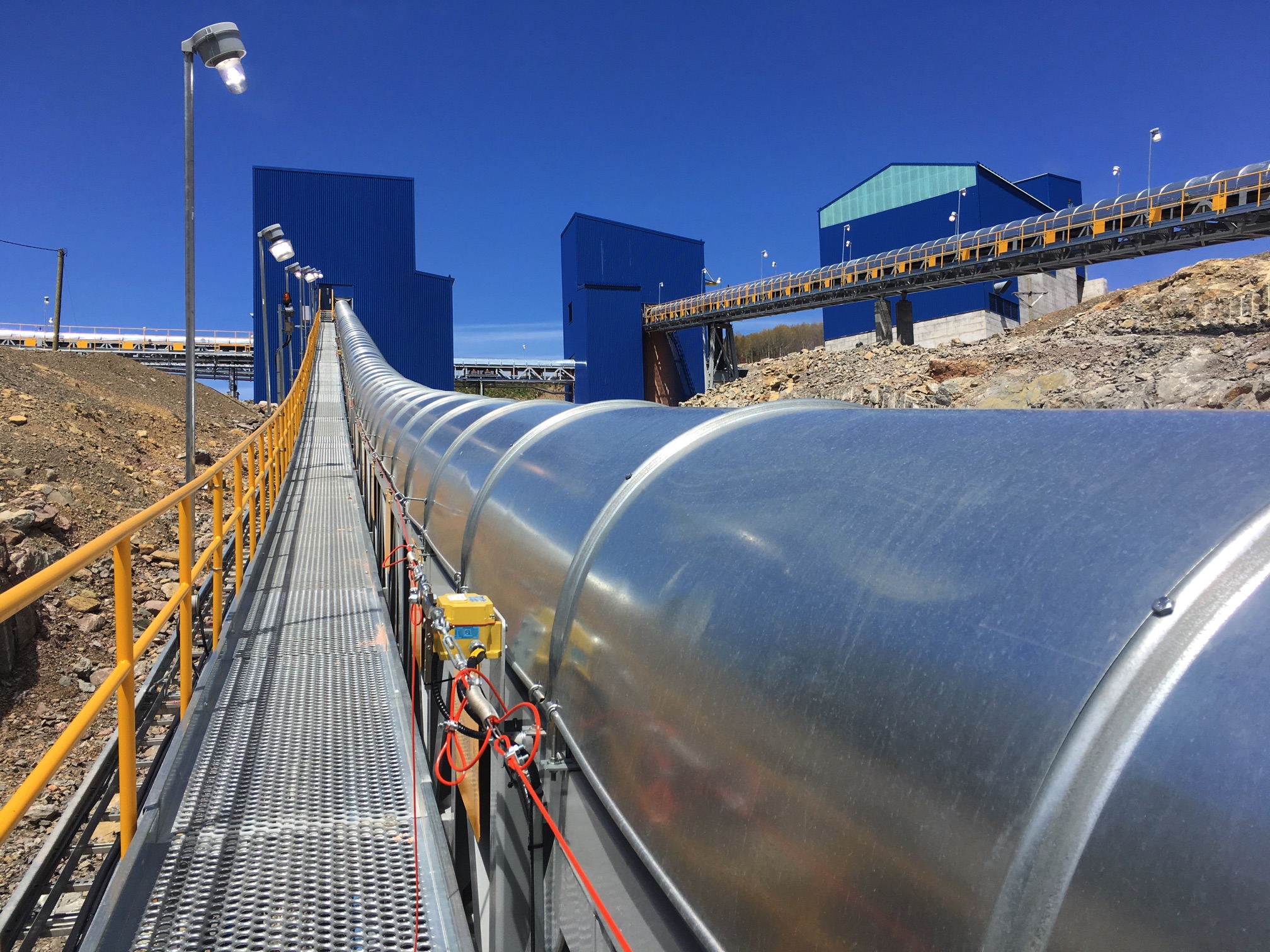
As temperatures begin to drop, fall is a good time to inspect material-handling equipment and prepare for the conditions ahead. Addressing wear, buildup and potential problem areas now can help reduce unexpected downtime during the colder months.
Check conveyor belts for cracking, fraying, mistracking and uneven wear. Look closely at belt splices and edges for early signs of damage.
Inspect rotating components for material buildup, worn lagging, excessive vibration, unusual noise or visible damage. Confirm that all components are turning freely and aligned correctly.
Look for worn liners, blockages, buildup and areas experiencing excessive impact or abrasion, belt cleaner condition, or skirtboard rubber contact with the belt. Make sure material can move smoothly through each transfer point.
Confirm that guarding is secure and properly positioned. Test emergency stops, pull cords, sensors and other safety systems according to your site procedures.
Check for oil leaks, overheating, loose connections and other signs of wear. Address any unusual sounds or changes in equipment performance.
Inspect lubrication points and confirm that the lubricants being used are suitable for colder operating temperatures. Follow the equipment manufacturer’s recommended maintenance schedule.
Check electrical connections, panels, cables and enclosures for moisture, corrosion or damage. Confirm that outdoor components are properly protected from winter conditions.
Remove debris and material buildup from drainage areas around equipment. Standing water can freeze and create equipment, access and safety concerns.
Examine platforms, stairs, handrails, walkways and supporting structures for corrosion, loose components or damage. Identify areas where snow and ice may create additional hazards.
Confirm that essential replacement parts are available before winter. Keeping frequently needed components on hand can help limit downtime when unexpected maintenance is required.
The seasons may change, but production requirements do not. A thorough fall inspection can help identify developing problems, support safer working conditions and keep material moving throughout the winter.
If an inspection identifies worn or damaged equipment, BID Canada can help with custom conveyors, chutes, bins, hoppers, guarding and other material-handling solutions.
All inspections and maintenance should be completed by qualified personnel according to equipment manufacturer recommendations and site safety procedures.


