
Project Overview
A mining operator preparing to restart operations faced a significant infrastructure challenge. The facility had been in service for decades, and the existing conveyor systems showed extensive corrosion and wear. As part of the restart, the client made the decision to replace the conveying infrastructure entirely to support material movement from the mine to a new crushing and screening station, and onward to a newly developed storage and port facility.
Given the scale of the project and the importance of bringing operations online efficiently, the client required a conveying solution that could be designed, built, and installed on an accelerated timeline while still accommodating a complex conveyor profile with elevation changes over long distances.
The Challenge
Historically, conveyor truss modules for similar projects were designed and fabricated in long sections, typically 40 to 50 feet in length. To accommodate vertical curves, each module incorporated custom structural “cranks,” requiring individual engineering, detailing, and assembly for every section of conveyor.

While effective, this approach increased design time, extended detailing schedules, and limited flexibility once engineering was complete. For a project with aggressive timelines and evolving layout requirements, a more efficient design approach was needed.
The Solution
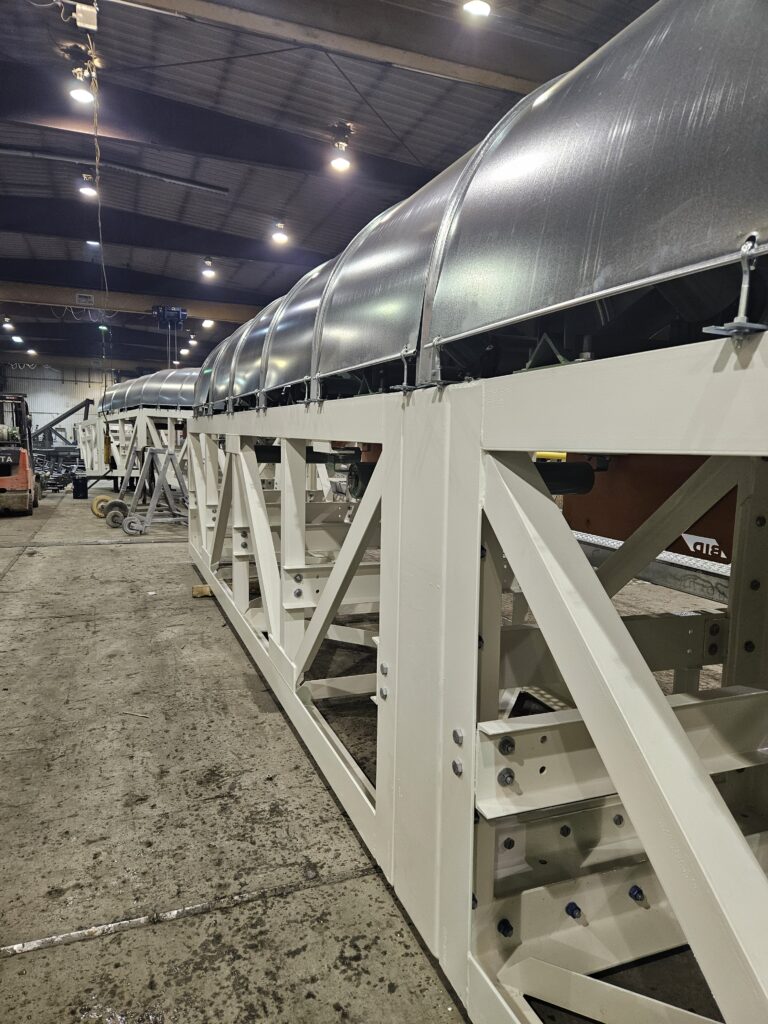
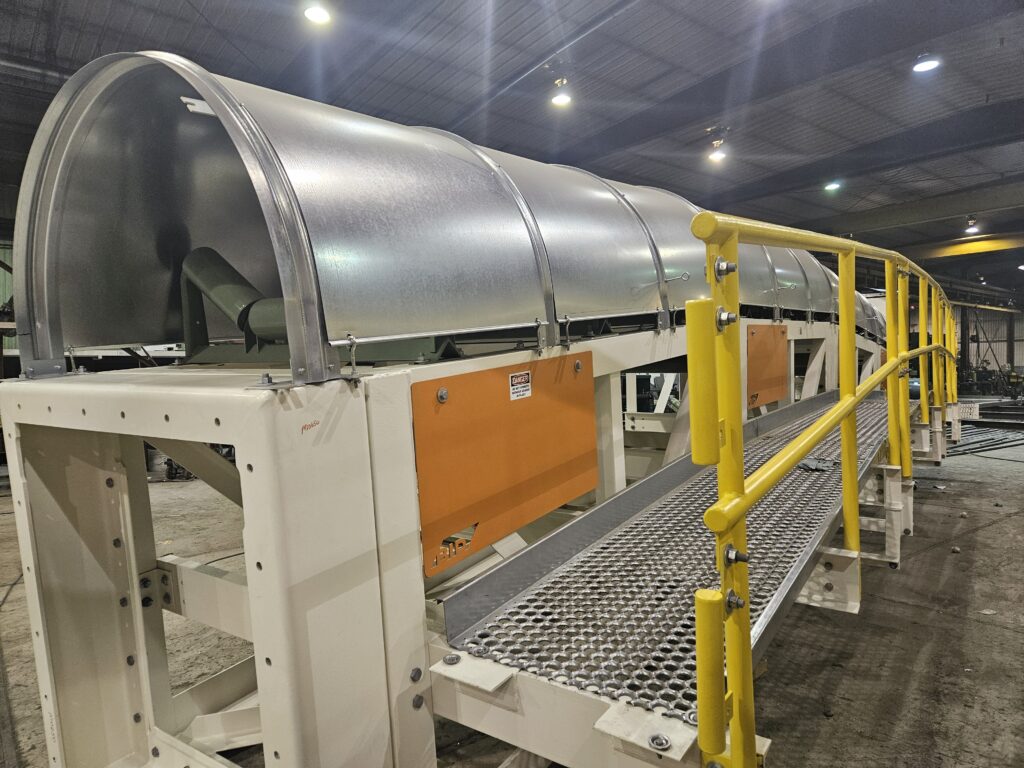
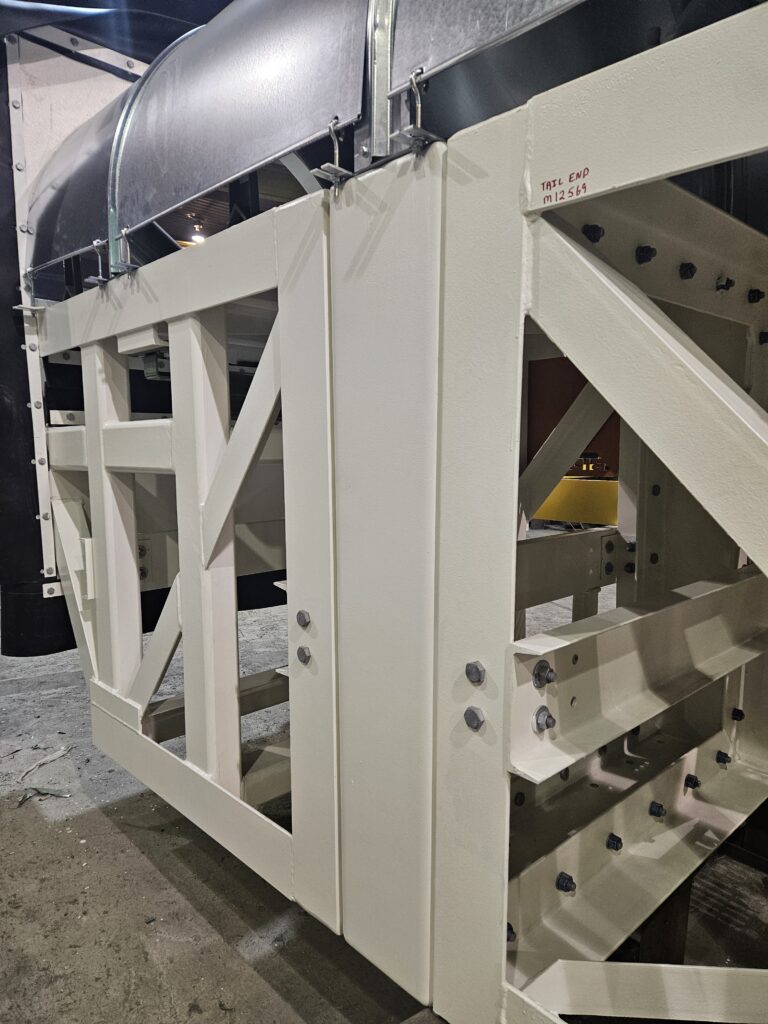
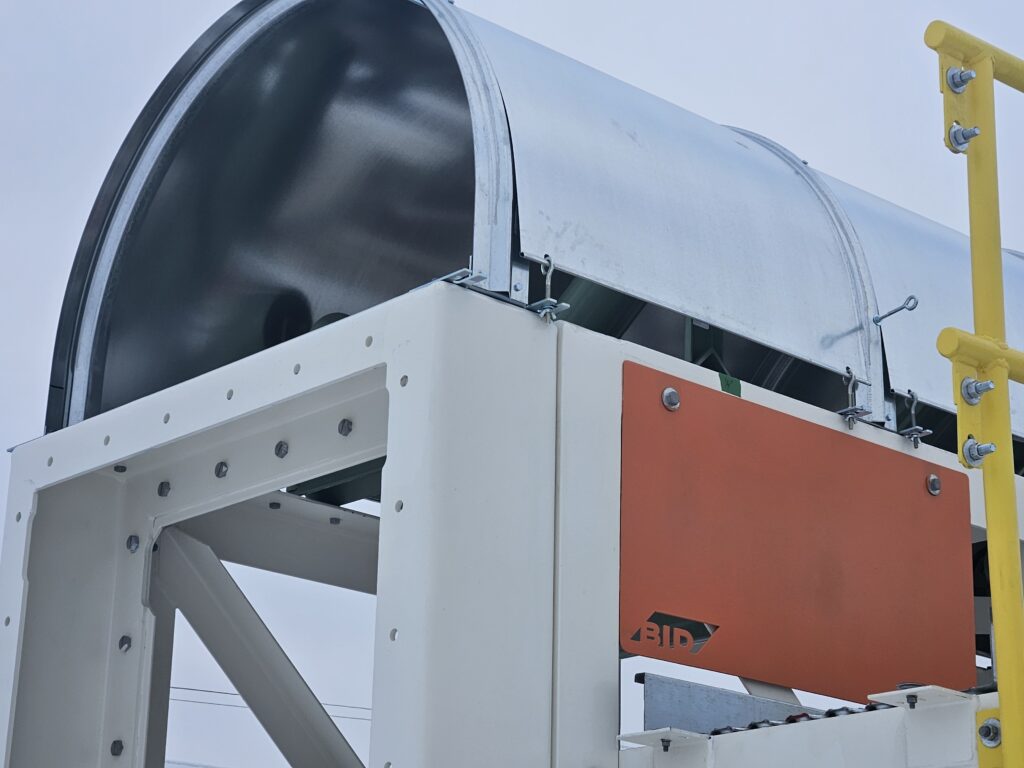
To streamline both design and fabrication, BID proposed a new standardized truss model using modular Alpha Truss sections paired with a proprietary coupler system. Each truss module was designed to be built identically, eliminating the need for repeated engineering and detailing across the conveyor length.
The proprietary couplers served two key functions: providing structural connection between modules and allowing controlled adjustment of the conveyor profile. This design enabled the system to accommodate vertical curves and elevation changes without modifying the individual truss modules themselves.
By standardizing the truss modules and shifting profile adjustments to the coupler interfaces, BID was able to complete the engineering and detailing process once and apply it consistently across the entire conveyor system.
Results
The modular Alpha Truss approach significantly reduced design and detailing time compared to traditional methods. Standardized fabrication improved consistency and simplified assembly, while the coupler system provided the flexibility needed to manage vertical curves across the conveyor route.
This approach allowed the project to move forward efficiently while maintaining structural integrity and alignment with the facility’s operational requirements. The result was a conveyor system that supported faster project execution and provided a scalable framework for future modifications or expansion.
Key Takeaways
By adopting a standardized, modular truss design paired with a flexible coupler system, the project demonstrated how conveying infrastructure can be delivered more efficiently without sacrificing adaptability. The Alpha Truss approach allowed engineering effort to be consolidated, fabrication to be streamlined, and complex conveyor profiles to be achieved through repeatable components.
For large scale material handling projects, especially those operating on accelerated timelines or planning for future change, this model provides a practical alternative to traditional one off conveyor designs. It establishes a foundation that supports both immediate operational needs and long term flexibility as facilities evolve.
For more information about the Alpha Modular Conveyor System or other BID Canada solutions, visit www.bidcanadaltd.com or contact Derek Lawrence at dlawrence@bidcanadaltd.com.