
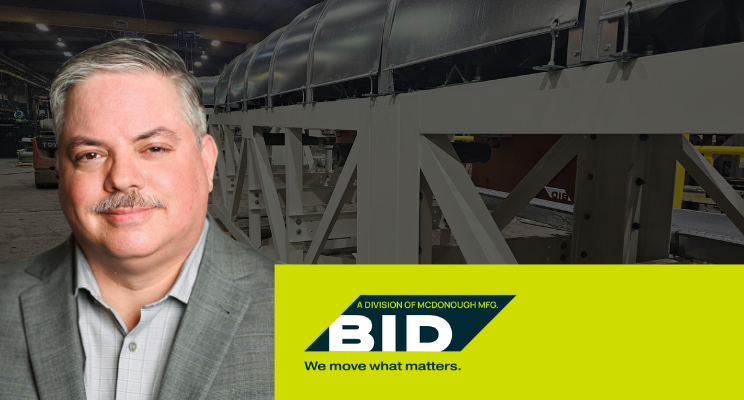
Before You Build with Derek Lawrence: Start With the Problem, Not the Equipment
When planning a significant material handling project, it’s natural to focus on the equipment first. What type of conveyor do we need? How wide should the belt be? How much horsepower is required? Those are all important questions, but they’re rarely the place to start.
The most successful projects begin by identifying the problem you’re trying to solve, not the equipment you think you need.
Is your goal to increase production? Reduce maintenance? Improve safety? Eliminate a bottleneck? Replace aging infrastructure? Every project has a different objective, and understanding that objective early influences every design decision that follows.
One of the most common mistakes is simply replacing existing equipment with something similar without asking whether the original design still meets the operation’s needs. Production rates change. Materials change. Facilities expand. A system that worked 20 years ago may no longer be the right solution today.
Before discussing equipment specifications, take the time to answer a few key questions:
- What material are you moving?
- What capacity do you need today?
- Where do you expect production to be in five or ten years?
- What maintenance challenges are you experiencing?
- Are there safety concerns with your current system?
- Where is unplanned downtime occurring?
These answers create the foundation for a system that’s designed around your operation instead of simply replacing what already exists.
Good planning also helps identify opportunities that might otherwise be overlooked. Sometimes a small change to the layout or conveyor arrangement can improve efficiency, reduce maintenance, or simplify future expansion without significantly increasing project costs. The earlier these conversations happen, the more options are available.
At BID Canada, we’ve found that the strongest material handling projects begin long before fabrication starts. They begin with understanding the operation, defining the objective, and developing a solution that supports the business for years to come.
About Derek Lawrence
Derek Lawrence has more than 25 years of experience in bulk material handling, with expertise in belt conveyors, screw conveyors, and drag chain conveyors. Throughout his career, he has helped customers plan and develop material handling systems that improve efficiency, reliability, and long-term performance. Through Before You Build, Derek shares practical advice based on real-world experience to help companies make informed decisions before their next project begins.
Derek lives in Woodstock, New Brunswick, with his wife Darlene. Outside of work, he enjoys Star Trek, road trips, and spending time with his nieces and nephew.