Cement and lime production depends on the continuous movement of large volumes of bulk material. From limestone and other raw materials through processing, storage and finished product handling, conveyors and transfer equipment provide the connections that keep material moving throughout the plant.
BID Canada designs and manufactures custom bulk material handling equipment for cement, lime and limestone processing operations. Our team works with plant owners, engineering firms and project partners to develop equipment around the material, required capacity, plant layout and operating conditions.
Based in Woodstock, New Brunswick, BID provides engineering, fabrication and material handling expertise for new installations, plant expansions and equipment upgrades throughout Eastern North America.
Cement and lime production involves moving materials with very different properties through multiple stages of processing. Limestone, gypsum, clinker, coal, petcoke and other raw or intermediate materials can vary considerably in density, particle size, moisture, abrasiveness and handling requirements.
BID designs material handling equipment around these characteristics and the requirements of the overall process.
Our cement and lime material handling capabilities include:
Conveyors provide critical connections throughout cement production, moving raw materials and intermediate products between receiving, crushing, processing, storage and other stages of the operation. BID designs and manufactures custom belt conveyor systems based on the requirements of each application.
Material characteristics, required tonnage, conveyor length, belt width, incline, loading conditions and surrounding equipment are considered during the engineering process.
For new facilities, conveyors can be developed as part of the overall material flow system. For established cement and lime plants, BID can also engineer equipment to integrate with existing infrastructure and processing equipment.
Limestone is a primary raw material in cement and lime production, making reliable limestone handling an important part of the overall process. Depending on the operation, material may need to move from the quarry or receiving area through crushing, storage and subsequent processing.
BID can design conveyors, transfer points, chutes, bins and supporting structures around the capacity and characteristics of the limestone being handled. For high-capacity or longer-distance applications, conveyor structure and routing can also be developed around site elevation, existing infrastructure and plant layout.
Material handling requirements continue throughout the cement manufacturing process. Clinker, gypsum, coal, petcoke and other materials each present different handling considerations. Abrasiveness, temperature, particle size, dust and material flow can influence the design and selection of equipment. Rather than applying one conveyor design throughout an entire plant, BID evaluates the requirements of the individual application and the material being conveyed.
This approach allows equipment to be developed around the actual conditions at each stage of the process.
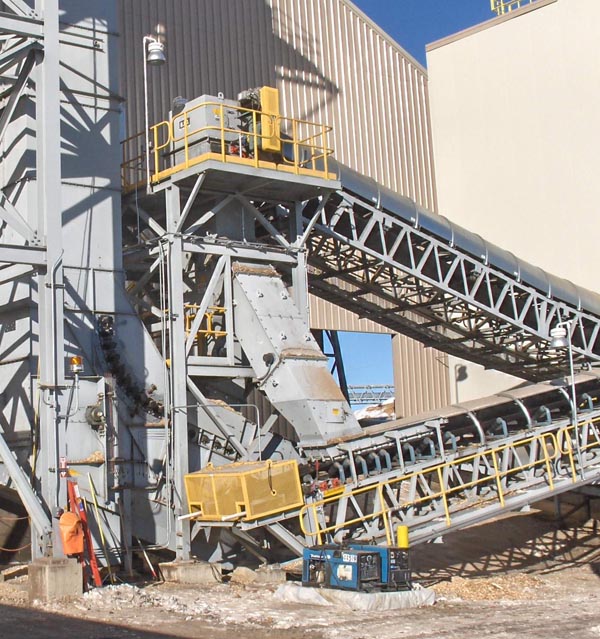
Transfer points are an important part of any cement or lime material handling system. BID designs and fabricates custom chutes and transfer components to direct material between conveyors, processing equipment, bins and storage areas.
Material flow, impact, abrasion, dust, surrounding equipment and maintenance access can all influence transfer-point design.
For applications involving abrasive materials, wear-resistant components and replaceable liners can also be incorporated where required.
[
Bins and hoppers are used throughout cement and lime facilities for receiving, temporary storage and controlled material discharge. BID designs and fabricates custom bins and hoppers around the material being stored, required volume, discharge requirements and surrounding equipment.
Components can be developed as part of a new system or engineered to integrate with existing conveyors and processing equipment.
Cement and lime facilities can require conveyors to travel significant distances between receiving areas, processing equipment and storage facilities.
BID designs and fabricates conveyor trusses, galleries, bents and supporting structures as part of its material handling systems. For suitable applications, BID’s Alpha Truss Conveyor System provides a modular approach to conveyor structure using standardized, pre-engineered sections that can be configured around project requirements.
This approach can simplify early conveyor planning while providing the flexibility required for elevation changes and longer material handling routes.
BID’s experience in the cement industry includes a major conveyor project at the McInnis Cement plant in the Gaspé region of Quebec. BID was brought into the project to help optimize the mechanical design of a large portion of the plant’s conveyor systems within an established site layout.
The project included approximately 6,000 feet of belt conveyors with 72-inch, 42-inch, 36-inch and 24-inch belt widths, along with supporting trusses, galleries, bents and interconnecting chute work. The conveyors were designed to handle a wide range of materials used throughout the cement operation, including limestone, petcoke, coal, bauxite, iron ore, silica, gypsum, pozzolan, clinker and alumina.
The project required more than supplying equipment. BID worked through conveyor routing and start-up challenges to develop a system around the operating requirements of the plant.
Cement and lime plants are long-term industrial assets, and material handling requirements can change throughout the life of the facility.
Production increases, new equipment, changing material sources and aging infrastructure can all create the need for modifications to existing systems.
BID works with customers to develop replacement and retrofit equipment that integrates with existing plant infrastructure. This can include replacement conveyors, new transfer points, structural modifications, guarding and additional material handling equipment required to support changes elsewhere in the operation.
BID combines engineering and fabrication at our facility in Woodstock, New Brunswick. Keeping these capabilities closely connected allows our engineering and manufacturing teams to collaborate throughout a project, considering how equipment needs to perform as well as how it will be fabricated, transported, installed and maintained.
For large industrial projects, components can also be preassembled where practical before shipment to help reduce the amount of work required at the project site.
Cement and lime are fundamental materials used throughout construction, infrastructure and industrial production. The Canadian cement industry continues to invest in plant efficiency, alternative fuels, lower-carbon production and other technologies as it works toward reducing the environmental impact of cement and concrete production.
As plants evolve, reliable bulk material handling infrastructure remains an essential connection between raw materials, processing equipment, storage and finished products.
Material needs to move reliably at every stage of cement and lime production. BID develops the conveyors, structures, chutes and other material handling equipment that create those connections.
Whether the project involves replacing an individual conveyor, expanding an existing plant or developing material handling equipment for a new facility, our team can work with you to develop equipment around the material, capacity and site requirements.
Planning a plant expansion, equipment replacement or new material handling system?
Talk to BID about the materials you need to move, required capacity, existing infrastructure and project requirements.