
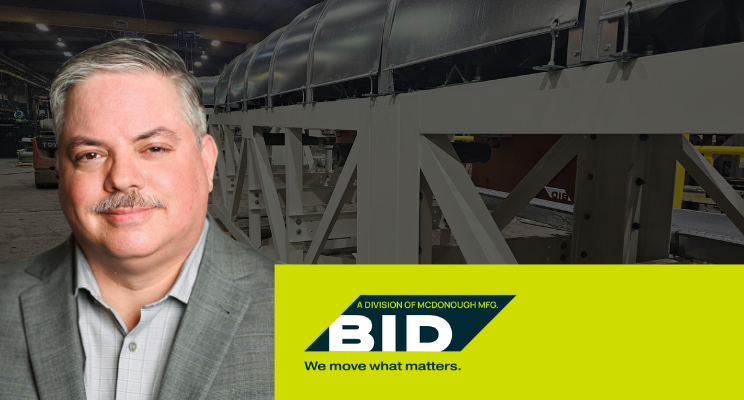
Before You Build with Derek Lawrence: Start With the Problem, Not the Equipment

When planning a significant material handling project, it’s natural to focus on the equipment first. What type of conveyor do we need? How wide should the belt be? How much horsepower is required? Those are all important questions, but they’re rarely the place to start.

The most successful projects begin by identifying the problem you’re trying to solve, not the equipment you think you need.

Is your goal to increase production? Reduce maintenance? Improve safety? Eliminate a bottleneck? Replace aging infrastructure? Every project has a different objective, and understanding that objective early influences every design decision that follows.

One of the most common mistakes is simply replacing existing equipment with something similar without asking whether the original design still meets the operation’s needs. Production rates change. Materials change. Facilities expand. A system that worked 20 years ago may no longer be the right solution today.

Before discussing equipment specifications, take the time to answer a few key questions:

  • What material are you moving?
  • What capacity do you need today?
  • Where do you expect production to be in five or ten years?
  • What maintenance challenges are you experiencing?
  • Are there safety concerns with your current system?
  • Where is unplanned downtime occurring?

These answers create the foundation for a system that’s designed around your operation instead of simply replacing what already exists.

Good planning also helps identify opportunities that might otherwise be overlooked. Sometimes a small change to the layout or conveyor arrangement can improve efficiency, reduce maintenance, or simplify future expansion without significantly increasing project costs. The earlier these conversations happen, the more options are available.

At BID Canada, we’ve found that the strongest material handling projects begin long before fabrication starts. They begin with understanding the operation, defining the objective, and developing a solution that supports the business for years to come.

About Derek Lawrence

Derek Lawrence has more than 25 years of experience in bulk material handling, with expertise in belt conveyors, screw conveyors, and drag chain conveyors. Throughout his career, he has helped customers plan and develop material handling systems that improve efficiency, reliability, and long-term performance. Through Before You Build, Derek shares practical advice based on real-world experience to help companies make informed decisions before their next project begins.

Derek lives in Woodstock, New Brunswick, with his wife Darlene. Outside of work, he enjoys Star Trek, road trips, and spending time with his nieces and nephew.
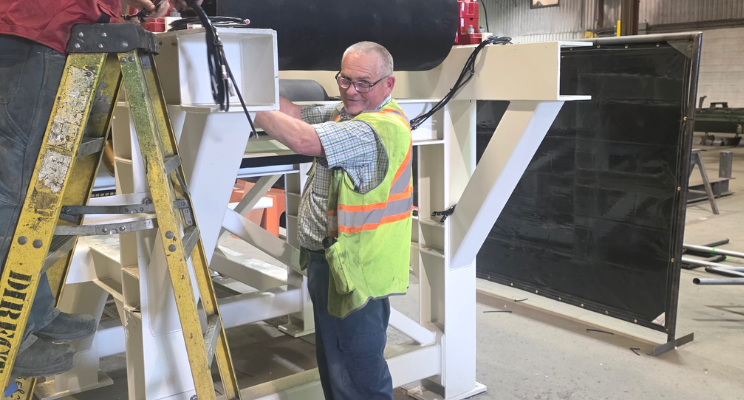
Meet James Walton: Decades of Experience Keeping Industry Moving

When it comes to conveyors, sawmills, and the equipment that keeps them running, James has spent nearly his entire career working hands-on with the machines that power these industries.

Growing up in the small settlement of Magaguadavic, James developed a love for the outdoors at an early age. Hunting, fishing, snowmobiling, and gardening have always been a big part of his life, and that appreciation for hands-on work has stayed with him ever since. After graduating from Harvey High School, he earned his Red Seal certification as an Industrial Millwright and began building a career that’s now spanned nearly three decades.

James spent 20 years working at a gypsum plant in McAdam before heading west, where he spent more than eight years in millwright construction. Throughout his career, he’s gained extensive experience working on conveyor systems and sawmill equipment, building the knowledge and troubleshooting skills that come from years in the field. Those experiences have shaped the practical, solutions-focused approach he brings to BID today.

What James enjoys most about his work is the opportunity to solve problems with his hands. Whether it’s repairing equipment, improving machines around the shop, or finding better ways to keep things running smoothly, he takes pride in seeing the results of his work every day.

Outside of work, James enjoys spending time with his family. He and his wife have two daughters and are proud grandparents to a grandson and a granddaughter, who help keep life fun and busy.

With decades of experience, a strong work ethic, and a genuine passion for hands-on problem solving, James is an important part of the BID team, and we’re glad to have him on board.

Conveyor Transfer Points

Why the smallest sections often have the biggest impact

A conveyor system is only as reliable as its weakest point.

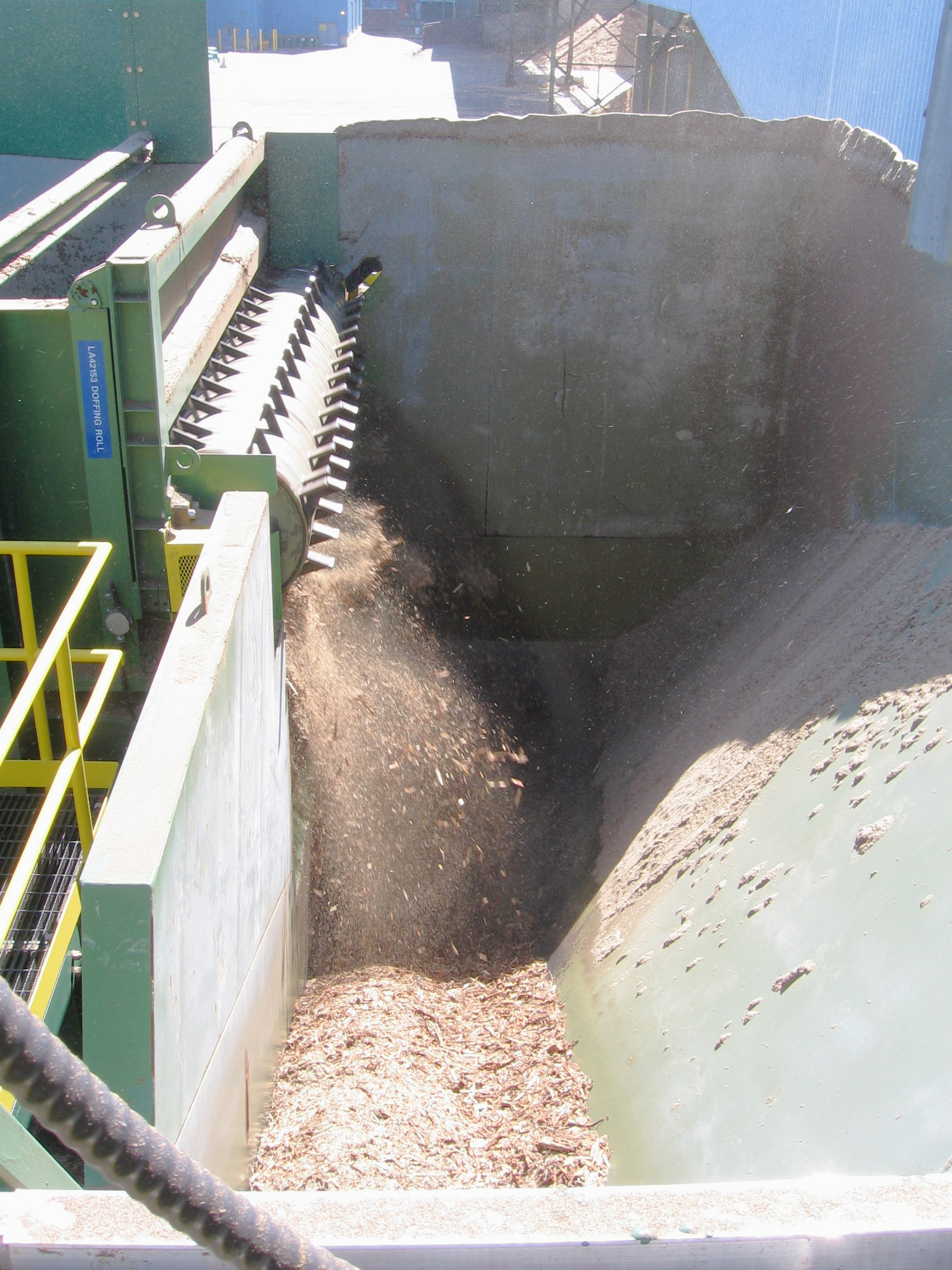
While attention is often focused on drive systems, motors, and major structural components, many conveyor failures begin in a much smaller area: the transfer point. These locations experience the highest concentration of impact, abrasion, vibration, and material turbulence, making them some of the hardest-working sections of any conveying system.

Whether handling aggregates, wood products, fertilizer, biomass, salt, potash, or mining materials, transfer points deserve regular inspection and thoughtful design. Ignoring them can lead to excessive wear, unplanned downtime, and unnecessary maintenance costs.

What Is a Transfer Point?

A transfer point is any location where material changes direction or moves from one conveyor to another. Although these transitions may only represent a small portion of the overall conveyor system, they are often responsible for a disproportionate amount of maintenance.

At these locations, material is accelerated, redirected, dropped, or funneled into a new flow path. This creates concentrated wear that isn’t typically seen along the remainder of the conveyor.

Why Transfer Points Experience More Wear

Several factors combine to make transfer points one of the highest-risk areas on any conveyor.

  • Impact Loading – Material often falls onto the receiving conveyor with significant force. Repeated impacts can damage liners, skirt boards, idlers, support structures, and even the belt itself.
  • Abrasion – High-velocity material sliding across steel surfaces gradually wears away liners, chutes, and wear plates. Even properly designed systems require routine inspection because abrasion is unavoidable.
  • Material Turbulence – When material flow is uncontrolled, it can bounce, ricochet, or spread unevenly across the belt. This creates additional wear while increasing the likelihood of spillage and belt tracking issues.
  • Dust Generation – Poorly designed transfer points can create excessive dust as material becomes airborne during transfer. Besides housekeeping concerns, dust can accelerate wear on nearby equipment and create safety concerns for personnel.

Common Warning Signs

Many conveyor failures don’t happen suddenly. They develop gradually, giving maintenance teams opportunities to intervene before a costly shutdown occurs.

Watch for:

  • Excessive material spillage around transfer points
  • Visible wear on liners or chute walls
  • Belt mistracking after a transfer
  • Damaged or seized idlers near loading zones
  • Cracking welds or structural fatigue
  • Increased vibration or unusual noise
  • Dust escaping from enclosed transfer areas
  • Frequent cleanup requirements

These symptoms often indicate that the transfer point is no longer controlling material flow as intended.

Other Conveyor Trouble Spots

Although transfer points are among the most common problem areas, they aren’t the only locations that deserve attention.

Loading Zones

Heavy loading can shorten the life of impact beds, idlers, and belt covers if not properly supported.

Pulley Areas

Drive, tail, and bend pulleys should be inspected regularly for lagging wear, alignment issues, and material buildup that can affect tracking.

Belt Tracking Locations

Misalignment often begins gradually. Catching it early helps prevent uneven belt wear and structural damage.

Return Side Components

Return idlers and cleaners are frequently overlooked, yet they play a critical role in preventing carryback and extending belt life.

Structural Supports

Corrosion, fatigue cracks, loose fasteners, and damaged bracing can compromise the entire conveyor system if left unchecked.

A Preventative Approach

The most effective maintenance programs focus on identifying wear before it becomes failure.

Regular inspections should include:

  • Monitoring wear liners and replaceable components
  • Checking chute alignment and material flow
  • Inspecting skirt sealing systems
  • Verifying idler condition and rotation
  • Looking for structural movement or cracking
  • Confirming proper belt tracking through transfer areas
  • Recording wear trends to predict maintenance intervals

A small repair completed during scheduled maintenance is almost always less costly than an unexpected shutdown.

Designing for Reliability

Well-designed transfer points don’t eliminate wear, but they can dramatically reduce it.

Proper chute geometry, controlled material flow, durable wear materials, accessible maintenance areas, and adequate structural support all contribute to longer equipment life and improved system reliability.

Whether designing a new conveyor or upgrading an existing system, investing attention in transfer points often delivers one of the highest returns in reduced maintenance and improved uptime.

Final Thoughts

Transfer points may occupy only a small section of a conveyor system, but they often determine how reliably that system performs.

By treating these high-wear areas as critical inspection points rather than afterthoughts, operations can reduce downtime, improve safety, extend component life, and keep material moving efficiently.

At BID Canada, we’ve worked with conveyor systems across mining, bulk material handling, forestry, ports, and heavy industry. One lesson remains consistent: the areas where material changes direction are almost always the areas that deserve the closest attention.

Meet Taher Saify: Problem Solver, Leader, and Lifelong Learner

As General Manager of BID Canada, Taher Saify brings more than 20 years of manufacturing experience and a passion for continuous improvement to the team. Having joined BID just over six months ago, he has quickly become an important part of the company’s leadership as we continue to support customers across the mining, bulk material handling, and industrial sectors.

Originally from Indore, a city in central India, Taher has called Canada home for the past 25 years. Along the way, he has built an impressive career spanning a wide range of industries including lead acid batteries, heavy farming equipment, plastic molding and extrusion, baking, sawmill equipment, and mining conveyor systems.

Taher brings a unique combination of technical knowledge and business leadership to his role. He is a Mechanical Engineer by training, holds a Master’s in Industrial Engineering from Dalhousie University, and completed his Executive MBA at Saint Mary’s University. His experience in solving problems, improving processes, and helping teams grow has made an immediate impact at BID.

Outside of work, family is at the center of life for Taher. He and his wife, who operates a hairstyling business, are raising their 13-year-old daughter, a self-proclaimed future Caitlin Clark, who keeps them both entertained and busy with her love of basketball. When he isn’t in the office or visiting customers, you’ll most likely find Taher on the golf course or enjoying one of his more unexpected hobbies: mathematics.

We’re excited to have Taher helping lead BID into its next chapter and look forward to what the future holds!

Meet Cheyenne: Keeping BID moving behind the scenes

Behind every successful project at BID Canada is a team of people working to keep things organized, moving, and on track. For the past three years, Cheyenne Morehouse has been one of those people, helping support our operations in her role as Bookkeeper.

Cheyenne’s story began in Bull Lake, New Brunswick, where she was raised by her father, who is blind, after her birth mother left when she was very young. She spent part of her childhood living with her grandparents, experiences that helped shape the resilience, independence, and perspective she carries with her today.

Cheyenne grew up in Bull Lake and remains deeply connected to her roots in New Brunswick. Outside of work, she enjoys reading, spending time fishing with her spouse Mike, and making memories with her son. She is also a proud graduate of New Brunswick Community College’s Accounting and Payroll Administration program, which helped lay the foundation for the career she has built today.

Giving back to the community is also important to Cheyenne. Over the years, she has volunteered with local organizations, including the Salvation Army, and completed a work placement with the Woodstock Valley Food Bank, where she particularly enjoyed the opportunity to support others and give back to the community.

At BID, what Cheyenne enjoys most is the variety that comes with the job.

“No two days at BID are the same. There is always some new project that needs attention, someone new to help, or something new to learn.”

That willingness to jump in, support others, and continue learning makes Cheyenne an important part of our team. Whether she is helping keep the financial side of the business running smoothly, assisting coworkers with questions, or tackling something new that comes across her desk, she brings a positive attitude and a team-first approach to everything she does.

Cheyenne also believes that our experiences help shape who we become. She values the lessons learned along the way and believes there is always something to be gained from new challenges and opportunities.

We are grateful to have Cheyenne as part of the BID Canada team and appreciate the dedication, adaptability, and willingness to help that she brings to the office every day.