BID Canada is pleased to announce that Taher Saify has been appointed President of the company, effective immediately.
Taher will assume this position in addition to his existing responsibilities within the organization. Since joining BID Canada, he has become an important part of the company’s leadership and continued growth.
Throughout his time with BID Canada, Taher has demonstrated a strong commitment to our employees, customers and operations. His practical approach, industry knowledge and focus on operational excellence have helped the company strengthen its capabilities and pursue opportunities across the industries we serve.
Taher has also played an important role in bringing our teams and resources together. With our Canadian manufacturing operations now consolidated in Woodstock, New Brunswick, BID Canada is well positioned to take on projects of varying sizes and complexity while continuing to provide the dependable service our customers expect.
As President, Taher will help guide the company’s direction, support our team and build on the experience and expertise that have shaped BID Canada over the years.
Please join us in congratulating Taher on this well-deserved appointment. We look forward to his continued leadership and to everything our team can accomplish together in this next chapter!
Mining might not get top billing in Game of Thrones, Star Trek, Star Wars or the Marvel universe, but take a closer look and some of pop culture’s biggest stories depend on what can be found beneath the surface.
Westeros has dragonglass. Superman has kryptonite. Starfleet needs dilithium. Mandalorians value beskar. Wakanda was transformed by vibranium. On Pandora, humans are willing to travel across space for unobtanium.
None of these materials exist quite as they’re portrayed on screen, but the idea behind them is surprisingly familiar.
Throughout human history, access to minerals and other natural resources has shaped technology, infrastructure, economies and entire communities. The materials may be different in the real world, but finding a valuable resource is still only the beginning.
Dragonglass: When Fantasy Meets Geology
In fiction: In Game of Thrones, dragonglass is a rare material capable of killing White Walkers.
In reality: This one isn’t entirely fictional. Dragonglass is essentially obsidian, a naturally occurring volcanic glass formed when certain types of lava cool rapidly.
Obsidian has been used by humans for thousands of years, particularly for cutting tools and weapons because it can fracture into extremely sharp edges.
It is a good reminder that people have been identifying, extracting and finding uses for naturally occurring materials long before modern mining existed.
Kryptonite: When a Mineral’s Properties Matter
In fiction: Kryptonite comes from Superman’s home planet of Krypton and is famous for having one particularly unusual property: it weakens Superman.
In reality: We haven’t discovered anything with quite that effect, but the concept of a mineral being valuable because of its unique properties is very real.
Hardness, density, conductivity, magnetism, heat resistance and chemical composition can all influence how a mineral or metal is used. Copper’s conductivity makes it invaluable to electrical systems. Iron is fundamental to steel production. Lithium has become increasingly important for rechargeable batteries. Nickel contributes strength and corrosion resistance to many alloys.
The value isn’t simply in finding something underground, it comes from understanding what that material can do.
Dilithium: Resources Behind New Technology
In fiction:Star Trek uses dilithium crystals to help regulate the matter-antimatter reactions that make warp travel possible.
In reality: Actual lithium isn’t getting us to another galaxy anytime soon, but it does play an important role in technologies we increasingly rely on here on Earth.
Lithium-ion batteries are widely used in phones, laptops, electric vehicles and energy storage systems. The connection is an interesting one because technological advancement frequently changes which natural resources are most important. As technologies evolve, demand for particular minerals can evolve with them. Starfleet has dilithium. We have a growing list of critical minerals.
Beskar: Strength Has Value
In fiction: In the Star Wars universe, beskar is a rare metal associated with Mandalore. Its incredible strength and resistance to damage make it one of the galaxy’s most valuable materials.
In reality: The same principle applies to many real metals.
Different metals and alloys are selected because they offer particular combinations of strength, weight, durability, corrosion resistance, conductivity or temperature tolerance. From bridges and buildings to aircraft, machinery and industrial equipment, material selection matters.
We may not be trying to manufacture armour that can withstand a lightsaber, but engineers make decisions based on material properties every day.
Vibranium: The Power of a Strategic Resource
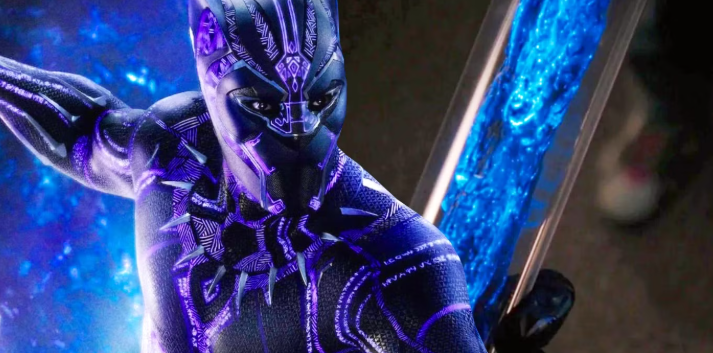
In fiction: Wakanda’s enormous vibranium deposit helps drive the technological development we see in Black Panther.
In reality: One mineral deposit isn’t likely to produce Wakanda, but the idea that natural resources can have significant economic and strategic importance is very real.
Iron ore, copper, nickel, lithium, cobalt, potash, rare earth elements and many other resources support industries and technologies around the world.
Their importance also changes over time. Materials that once had relatively specialized applications can become strategically important as new technologies emerge. A mineral deposit can create opportunity, but realizing that opportunity requires far more than simply knowing the resource is there.
Unobtanium: Finding It Is Only the Beginning
In fiction: In Avatar, humans travel to Pandora to extract unobtanium, an extremely valuable mineral found in a place that is anything but easy to access.
In reality: This might actually be one of the more relatable mining concepts on the list.
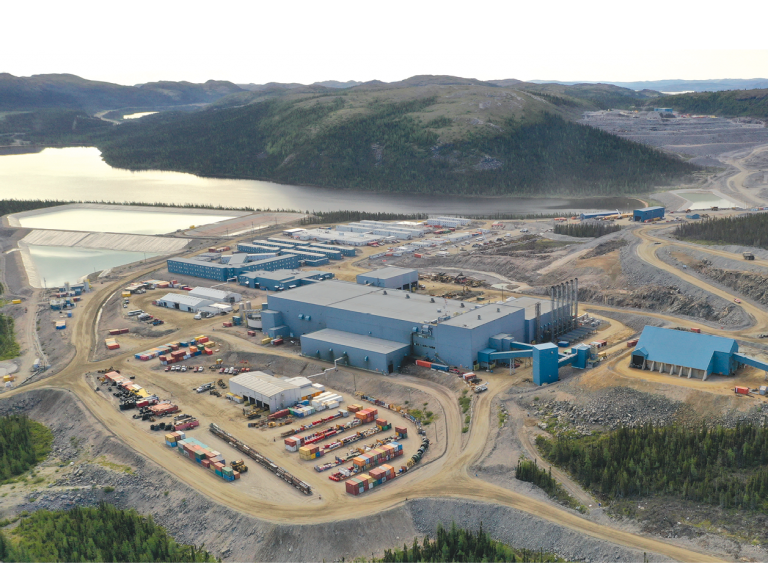
Many mineral deposits are located in remote or challenging environments. Developing them can require roads, power, processing facilities, transportation infrastructure and enormous amounts of engineering before meaningful production can begin. Once ore is extracted, it may need to be crushed, screened, sorted, processed, stored and transported through multiple stages before becoming a usable product.
Finding a resource is a major accomplishment, but oving and processing millions of tonnes of material safely and efficiently is another challenge entirely.
The Real Story Behind the Fiction
Pop culture exaggerates what minerals can do, but it gets one fundamental idea right: materials matter. Civilizations in these fictional worlds depend on access to resources because those resources make other things possible, and so do we.
Modern transportation, communications, construction, energy infrastructure, manufacturing and technology all begin somewhere with raw materials. The mining industry has also become increasingly sophisticated in how those materials are extracted and processed. Modern operations use automation, advanced sensing, ore sorting, improved processing technologies and highly engineered material handling systems to improve efficiency and make better use of the resources being recovered.
For companies like BID Canada, this is where mining becomes a material handling challenge. Conveyors, chutes, feeders, bins, hoppers and other bulk material handling equipment help move material through the different stages of an operation. Every project brings different material characteristics, capacities, layouts, environments and operating requirements, which means the equipment moving the material has to be designed around the application.
We haven’t been asked to design a conveyor for vibranium, beskar or unobtanium yet, but if someone finds a deposit, we’d certainly like to hear about it!
Until then, we’ll stick with the materials being mined here on Earth.
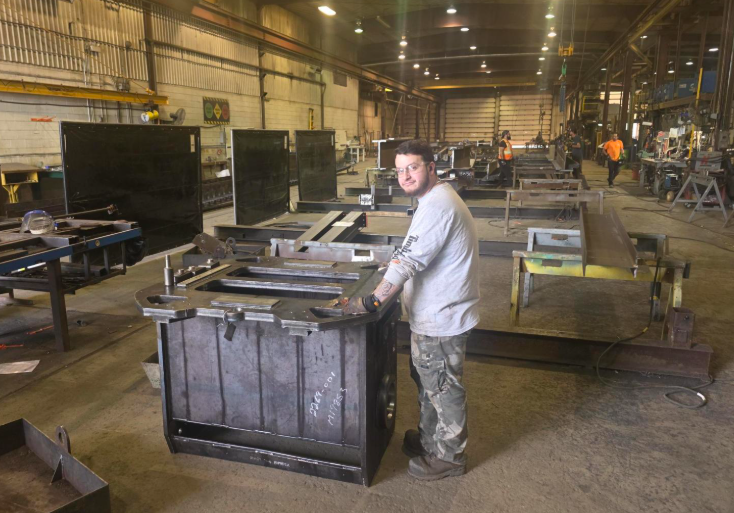
Meet Max Berube, a fitter in our Woodstock shop who has been part of the BID Canada team for the past year.
Max was born in Grand Falls, New Brunswick, where he lived until he was 15 before moving to Woodstock. He has called the area home for the past eight years and stayed close to home when it came time to continue his education. Max attended NBCC Woodstock, where he studied Welding and Fabrication, building the skills that he now puts to work every day at BID.
As a fitter, Max plays an important role in taking a project from the drawings to the shop floor. His work involves fitting and assembling components so everything is properly positioned and ready for welding. With the variety and size of the projects that move through our facility, it’s a job that requires a good understanding of drawings, attention to detail and plenty of hands-on skill.
After a year with BID, Max has become a great addition to our Woodstock team and another example of the skilled tradespeople we’re fortunate to have working right here in New Brunswick.
Outside of work, Max enjoys travelling, riding his motorcycle and spending time with his family.
We’re glad to have Max as part of the BID team and to put the Employee Spotlight on him!
When we think about mining, we tend to focus on what comes out of the ground. Extraction, however, is only the beginning. Once a mine extracts material, the operation needs to move it through several stages. These can include crushing, screening, conveying, stockpiling, mineral processing and loadout. This makes mining material handling an important part of the overall operation. Each stage needs to connect efficiently with the next to keep material moving.
What Happens After Extraction?
The process varies depending on the mine and the material being handled. In many operations, material moves through several pieces of equipment before it reaches its final destination. A crusher may reduce the material to a more manageable size. Conveyors can then move it to another crusher, a screen, a stockpile or a mill. Each step depends on the one before it. If material does not move consistently between stages, it can affect other parts of the operation.
Every Transfer Point Matters
Moving bulk material involves more than getting it from Point A to Point B. Every time material changes direction or moves between equipment, it passes through a transfer point. Each of these points presents its own considerations. Material size, moisture content and abrasiveness can influence how it flows. The required capacity also affects the design of the transfer.
A poorly planned transfer can contribute to spillage, buildup and uneven loading. It can also increase wear on equipment. Looking at these transfer points as part of the complete system can help identify potential issues before they affect other processes.
Layout Plays an Important Role
Mine sites rarely offer a simple, flat route for moving material. Conveyor systems may need to navigate elevation changes and existing infrastructure. They also need to connect crushers, screens, ore sorters, stockpile, and mills. The shortest route does not always provide the best solution. System layout can affect how many times an operation handles material. It can also influence the number of transfer points required and the distance material needs to travel.
For this reason, planning a bulk material handling system requires a broader view of the operation. Engineers need to consider how material will travel reliably through the entire process.
Stockpiles Do More Than Store Material
Stockpiles provide an important buffer between different stages of a mining operation. One process may operate at a different rate than the next. A stockpile can hold material between those stages and help maintain a consistent supply downstream. The way an operation builds and reclaims a stockpile also matters. These decisions can influence how consistently material moves into the next stage of processing or to a terminal or related infrastructure for transporting product.
Looking at Material Handling as a Complete System
Conveyors, chutes, feeders, crushers, screens and storage systems each perform a specific job. However, they also need to work together. A change in one area can affect equipment further downstream. Material characteristics can also change how the system performs. That is why effective mining material handling infrastructure requires more than selecting individual pieces of equipment. It requires an understanding of the material, the site and the complete path between extraction and loadout.
Getting material out of the ground is one challenge. Moving it through everything that comes next is an important part of the process too.her challenge entirely.